On your tour in Rwanda, you can participate in a lot of tour experiences which can give you unforgettable memories and some of the most popular ones include the following;
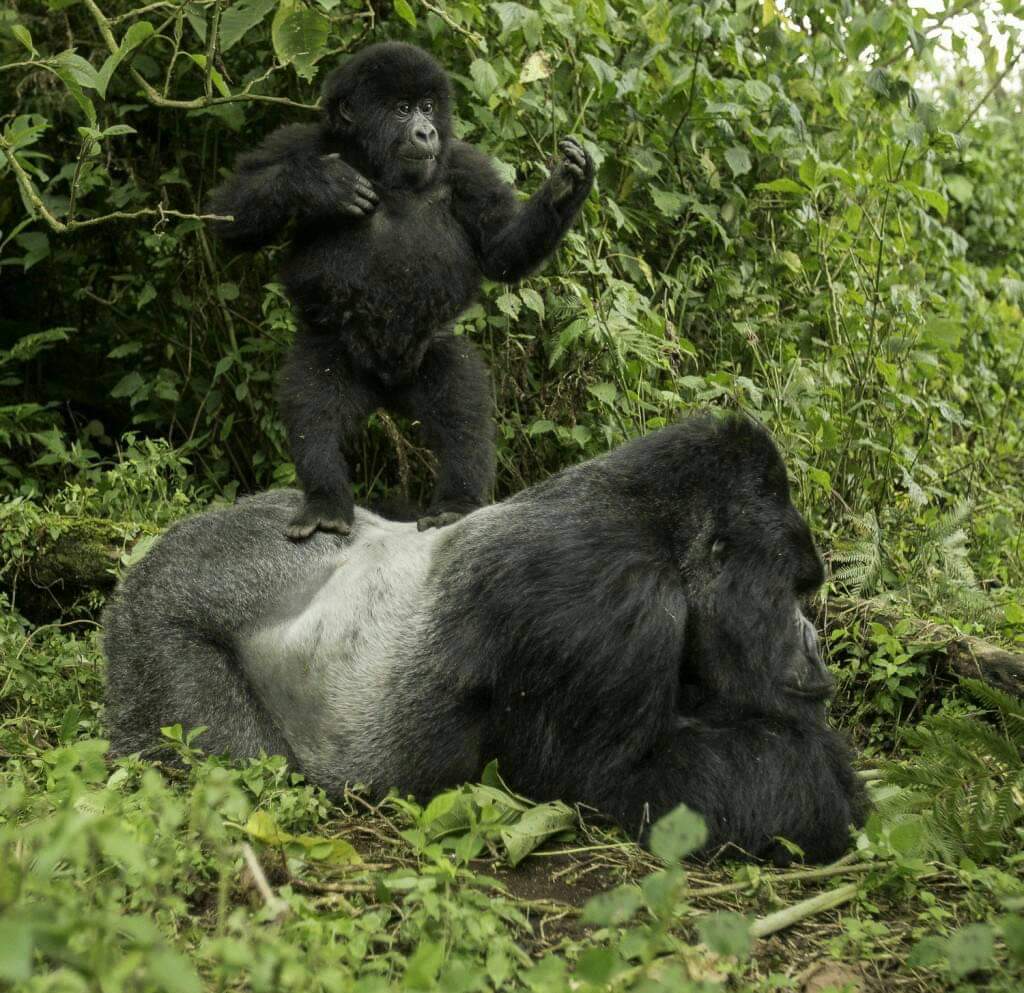
Gorilla Trekking. One of the best wildlife experiences you can have in Rwanda is seeing mountain gorillas in their natural habitat. Volcanoes National Park is the ideal spot to see mountain gorillas in pristine, undisturbed bamboo forest.
Mountain gorilla trekking tours start in Musanze at the Volcanoes National Park headquarters with a briefing. Once you get there, the park officers check your documents and assign you a professional guide and expert trackers. The guide will brief you on the rules and protocols for visiting these critically endangered creatures.
No visiting these creatures when you are sick because gorillas share about 98% of their DNA with humans and these respiratory infections can be fatal for the gentle giants.
After the park formalities are wrapped up, the mountain gorilla trek officially begins; it can range from 30 minutes to 4 hours depending on the location of the gorilla family allocated to you. Upon encountering them you will spend an hour with the family as they go on about with their daily life. After the trek, you can return to the head office for your trekking certificates as well as having your lunch.
Chimpanzee Tracking & Canopy Walk. Chimpanzee tracking and the canopy walk are among the most exciting activities in Nyungwe National Park. Located in southwestern Rwanda, Nyungwe protects a vast montane rainforest that is a home to chimpanzees and many other species of primates, birds and plants. The park is internationally recognized for its exceptional biodiversity and was designated a UNESCO World Heritage Site in 2023.
Chimpanzee tracking is a guided forest experience that usually begins early in the morning. Visitors hike through the rainforest with experienced guides and trackers in search of habituated chimpanzee communities. Once the chimpanzees are located, visitors can observe their natural behaviour including feeding, climbing, calling and interacting with one another. The trek can be challenging because of Nyungwe’s steep and sometimes muddy terrain and therefore hikers are advised to move along with comfortable hiking shoes, appropriate clothing and a good physical fitness is recommended.
The Nyungwe Canopy Walkway provides a different perspective of the forest. The suspension bridge is approximately 160 metres long and 70 metres above the ground, allowing visitors to walk above the treetops and enjoy views of the rainforest, valleys and surrounding hills. The walkway is reached through guided forest trails and visitors may also see birds, butterflies, monkeys and other wildlife along the way. It is also an excellent opportunity for photography and appreciating the structure and beauty of the rainforest from above.
Combining chimpanzee tracking with the canopy walk gives visitors a broader experience of Nyungwe National Park—one focused on wildlife and the other on the forest landscape. Both activities also support conservation and responsible tourism by creating economic value for protecting Nyungwe’s unique ecosystem. Visitors should follow their guides, remain on designated trails, avoid disturbing wildlife and respect the park’s conservation regulations.
Lake Kivu Relaxation. Lake Kivu is one of Rwanda’s most beautiful destinations for relaxation, offering peaceful scenery, pleasant lakeside environments and views of green hills surrounding the water. Located in western Rwanda along the border with the Democratic Republic of the Congo, it is one of Africa’s Great Lakes. The main tourist areas include Rubavu, Kibuye and Rusizi.
Visitors can relax along the lakeshore, enjoy boat trips, swim in designated areas or simply take in the peaceful landscape. Lake Kivu is also known for its attractive beaches and lakeside resorts making it suitable for travelers looking for a slower pace after activities such as gorilla trekking, chimpanzee tracking or hiking. Sunset views over the lake and surrounding hills are particularly popular.
A stay around Lake Kivu can therefore be an ideal way to combine rest, beautiful scenery and light outdoor activities. The calm atmosphere, fresh air and spectacular landscape make the lake an important part of Rwanda’s tourism experience.
Akagera Wildlife Safaris. Akagera National Park is Rwanda’s main savannah safari destination located in the eastern part of the country along the Tanzanian border. The park covers roughly 1,000 square kilometres and combines open savannah, woodland, wetlands, rolling hills and numerous lakes creating habitats for a wide variety of wildlife.
Akagera wildlife safari can offer sightings of the Big Five such as lions, leopards, elephants, buffaloes and Eastern black rhinoceros along with giraffes, zebras, antelopes, hippos and crocodiles. Game drives are the principal way to explore the park while boat trips on Lake Ihema provide opportunities to see hippos, crocodiles and abundant waterbirds.
Akagera is also an important birding destination with around 400–500 recorded bird species including the sought-after shoebill and papyrus gonolek. Wildlife conservation has played a major role in the park’s recovery including the reintroduction of lions and black rhinos and ongoing management in partnership with African Parks and the Rwanda Development Board.
Dian Fossey Museum. The Dian Fossey Museum is found in Musanze just outside Volcanoes National Park Rwanda in between Mount Bisoke and Mount Karisimbi. Dian Fossey museum is about 2 hours’ drive from the heart of Kigali. This is where Dian Fossey used to stay and its where she used to make her research from. This museum is where the belongings of the late Dian Fossey are kept and even the remains of some poached gorillas can be found here for conservation and protection. It is only at this museum where primate travelers can get facts about the success story of gorilla protection and conservation.
The museum was founded in remembrance of Dian Fossey for her big role she played about the protection of gorillas.
It is highly recommendable for someone to pay a visit to this museum after or before gorilla trekking. It was founded to help extend Dian Fossey Fund conservation and education initiatives to students and communities adjacent to the park.
On your visit to Dian Fossey Museum, you can still go for a hike at Dian Fossey’s graves in case if you get a chance. This hike is started by following the footsteps of Dian Fossey. Dian Fossey was a famous American Primatologist who spent 18 years in the forest working towards saving the mountain gorillas from extinction. She is the lady premiered in the popular 1988 Movie “Gorillas in the Mist” which brought attention of the mountain gorilla conservation to the world. She was buried in the same area with one of her favorite gorilla Digit.
Iby’Iwacu Cultural Village. Iby’Iwacu Cultural Village is a community-based cultural tourism attraction located near Kinigi and Volcanoes National Park in Musanze District. The name Iby’Iwacu is associated with the idea of “our heritage” or “our home.” The village was established to provide alternative livelihoods for communities living around Volcanoes National Park particularly people who had previously been involved in wildlife poaching. By creating opportunities in tourism, crafts and other enterprises, the initiative links community development with conservation. Today, the community organization is also known as Gorilla Guardians.
One of the main activities done here is the guided community walk. Visitors move through the village with local guides and learn about everyday life, local traditions and community activities. The walk can include visits to local schools, agricultural areas, craft businesses and other places of cultural interest. Visitors may also interact with residents and learn about how local people in the area make their livelihoods.
Another important activity is a visit to the traditional King’s house. The village contains a replica of a traditional Rwandan royal residence where guides and elders explain the role of the king, the organization of the ancient kingdom and the meaning of different objects and symbols. Visitors can also participate in a symbolic royal enthronement ceremony in which an elder demonstrates elements of the traditional coronation and gives the visitor a temporary role as king.
Traditional music and dance are central to the experience. Visitors can watch performances including the Intore dance, accompanied by traditional instruments such as drums (ingoma), inanga, umuduri, ikembe, ingingiri, amakondera and agakenke. Some performances also include ibyivugo, a traditional form of praise or heroic recitation. Visitors may be invited to participate in dancing or drumming.
Iby’Iwacu also demonstrates traditional food preparation and agricultural activities. Visitors can see or participate in activities such as cultivating crops, harvesting potatoes and vegetables, grinding sorghum or millet with traditional grinding stones and preparing local dishes. Traditional foods mentioned in descriptions of the experience include ubugari and igikoma. These activities help visitors understand the practical skills involved in traditional rural life.
In the village, visitors can also learn about banana beer production. Local hosts demonstrate how bananas are processed and fermented to produce a traditional beverage. The activity introduces visitors to a traditional food-processing practice and its place in community life.
Traditional medicine is another feature. A traditional healer can introduce visitors to locally known medicinal plants including trees, shrubs and grasses, and explain their traditional uses.
The village also provides opportunities to learn traditional crafts including pottery and other forms of handicraft. Some activities are associated with the Batwa community whose members have historically practiced skills such as pottery and traditional hunting techniques. Visitors can learn about these skills and hear stories concerning changes in the community’s way of life.
An important feature of Iby’Iwacu is its relationship with wildlife conservation. The project was developed to provide former poachers and surrounding communities with alternative sources of income, reducing the economic incentive to hunt wildlife in and around Volcanoes National Park. The wider Gorilla Guardians organization currently describes its work as supporting reformed poachers and communities around the park through community-based tourism, arts and crafts, agriculture, education, health and other livelihood initiatives.
Musanze Cave. Musanze Cave is one of Rwanda’s best-known natural and geological attractions. It is located in the Musanze District of Rwanda’s Northern Province near the foothills of the Virunga volcanic mountains. The cave is approximately 2 kilometres long and is part of a volcanic region formed by ancient lava flows. Rwanda’s tourism authorities describe the cave as having developed from volcanic rocks associated with the Virunga region with lava flows from the area around Mount Bisoke and Mount Sabyinyo contributing to its formation.
The cave has 31 entrances, many of which were created when sections of the cave roof collapsed. Its main entrance is exceptionally large and has been compared by Rwanda’s tourism authorities to the size of a cathedral. Sunlight enters through the openings and produces shafts of light inside the dark passages, creating distinctive scenery. The cave is also a home to a sizeable bat colony, making it an interesting site for visitors interested in geology and wildlife.
Musanze Caves were used as places of shelter during wartime for many centuries. They were also associated with tragic events during the 1994 Genocide against the Tutsi including a massacre. Because of this history, the site has significance for local communities and visitors are expected to behave respectfully while exploring it.
The main activity is a guided cave tour. Visitors enter the cave with trained guides who explain its geological formation, history and cultural importance. During the tour, visitors walk through the underground passages, observe the different cave entrances and roof collapses and see the natural light entering through openings in the roof. The bat colony and the unusual volcanic rock formations are also important features of the visit.
Musanze Cave contributes to Rwanda’s nature, geological and cultural tourism. It is especially significant because it combines natural features with human history. It also complements other attractions around Musanze including Volcanoes National Park which is known for its mountain gorillas, golden monkeys and volcanic landscapes. The cave is therefore an important attraction for visitors who want to experience something different from wildlife trekking.
Access to the cave is restricted to guided visits, reflecting both safety considerations and the site’s cultural significance. Rwanda’s official booking information currently states that children under 12 years are not permitted to enter the caves.
Azizi Life Experience. The Azizi Life Experience is a community-based cultural tourism program in Rwanda that allows visitors to experience everyday life in rural Rwandan communities. It was launched in 2012 following a hosting day created by one of Azizi Life’s artisan partners, the Abarikumwe Cooperative. The experiences are mainly organized from Azizi Life’s location in Byimana, Ruhango in Rwanda’s Southern Province about an hour from Kigali.
Visitors can spend a day with an artisan host family and take part in ordinary activities such as collecting water, helping with farming or food preparation and sharing a traditional meal. Depending on the experience chosen, visitors can also learn traditional crafts such as weaving and pottery, make banana juice, learn traditional cooking or construction techniques and participate in cultural activities such as drumming and dancing.
- A Day in the Life of an Artisan
This is one of the main Azizi Life experiences. Visitors travel to a nearby rural community with an Azizi Life interpreter and are welcomed by members of a weaving cooperative. After introductions, visitors participate in ordinary household and farming activities. These may include helping in the kitchen, collecting water from a valley spring, cutting grass for farm animals and participating in seasonal agricultural work. The purpose is to give visitors an understanding of the work that forms part of everyday rural life in Rwanda rather than simply watching it.
At lunchtime, visitors share a simple meal with their host family. The meal is a typical vegetarian local meal which may include foods such as cassava and beans. Lunch also provides an opportunity for conversation whereby visitors can ask their hosts about their community and daily lives while the hosts can learn about the visitors’ lives and countries.
In the afternoon, visitors join the artisan cooperative for weaving and craft-making. They learn how natural fibres are harvested and prepared and receive individual instruction in making a simple item such as a piece of sisal jewelry. The activity allows visitors to experience the patience and practical skills involved in traditional craft production.
The experience normally ends with a return to the Azizi Life office where visitors can have a drink, reflect on the day’s activities and view handmade products produced by Azizi Life’s artisan partners. Visitors can also purchase crafts through the organization’s fair-trade activities.
- Traditional Coffee Experience
The Traditional Coffee Experience introduces visitors to the process of producing and preparing coffee in a rural Rwandan setting. After arriving in the host community, visitors meet the cooperative and are introduced to their host family. They may participate in preparing the day’s meal before going to the coffee fields where they help with activities such as weeding and harvesting coffee cherries.
Visitors then learn about the early stages of coffee processing. They can help wash and pulp the coffee beans and place them out to dry in the sun. Water collection from a valley spring is also included in the example schedule. The experience therefore demonstrates that coffee production involves considerably more work than simply roasting and drinking the finished product.
- Banana Juice Making
Another experience focuses on the traditional preparation of banana juice. Visitors learn about the local process of making the drink and participate in its preparation with members of the community. This activity provides an opportunity to learn about locally available crops and how they are traditionally transformed into food and beverages. Banana juice making is listed by Azizi Life among its community-based experience activities.
- Traditional Cooking
The Traditional Cooking Day gives visitors an opportunity to participate in the preparation of traditional Rwandan food. Visitors take part in the cooking process and learn from local hosts. The activity can help visitors understand the ingredients, methods and household work involved in preparing meals in rural communities. A local meal shared with the host family is also an important part of the wider cultural exchange.
- Traditional Pottery
The Traditional Pottery Experience introduces visitors to pottery as a traditional craft. Participants learn from local artisans and gain practical experience with the materials and techniques used to create pottery. The activity forms part of Azizi Life’s wider effort to connect visitors with Rwandan artisans and traditional skills.
- Traditional Construction
Traditional Construction is another activity offered through Azizi Life. It gives visitors an opportunity to learn about traditional building practices and participate in practical construction-related work. Earlier descriptions of the Azizi Life cultural experience specifically mention activities such as making bricks and traditional building, showing how construction can be used to teach visitors about practical aspects of rural life.
- Candle Dipping and Hive Making
Candle dipping involves making candles by repeatedly building up layers of wax while hive making introduces participants to the construction of structures used for beekeeping. These activities demonstrate traditional and practical skills connected with rural livelihoods.
- Home Stay Experience
The Home Stay Experience allows visitors to spend more extended time experiencing rural community life by staying with a local host family. It provides a deeper opportunity for cultural exchange because visitors can experience aspects of family and community life beyond a short daytime visit.
- Traditional Drumming and Dancing
Azizi Life also offers Traditional Drumming and Dancing, allowing visitors to engage with Rwandan music and dance. The activity provides an introduction to traditional performance and gives participants an opportunity to learn through active involvement rather than observation alone.
- Azizi Life Pathways and Rural Walking
Azizi Life Pathways provides guided walking experiences through Rwanda’s countryside and communities. Local guides provide information about the communities and points of interest encountered along the route. Visitors can choose walks of different distances and at different paces including rural excursions and some routes involving local markets and other aspects of rural life.
- Craft Shopping and Meeting Artisans
This activity is about visiting Azizi Life’s craft displays and shops. Visitors can see and purchase handmade products produced by partner artisan groups including woven items, baskets, jewelry, bags and home decor. Azizi Life states that it works with more than 60 independent artisan groups, representing more than 760 artisan partners. The organization describes its work as fair trade and says it aims to provide artisans with agreed fair wages and access to wider markets.
Intore Dance. The Intore Dance is a traditional Rwandan dance that has deep historical and cultural importance. The word Intore is commonly translated as “the chosen ones” or “leaders.” Traditionally, Intore dancers were selected and trained in Itorero, where they learned not only dancing but also cultural values, discipline, public speaking, and other skills. The dance was closely associated with warriors and the royal court.
During a performance, dancers move in organized lines and make energetic leaps while using spears and shields to represent warriors in battle. Their movements are accompanied by traditional drums, horns, songs, and poems celebrating strength and victory. The distinctive costumes and powerful movements make the performance both artistic and symbolic.
Intore is performed at cultural celebrations, weddings, harvest festivals, and ceremonies welcoming important guests. It is also taught through schools, universities, families, and community groups, helping younger generations preserve Rwandan cultural heritage. In 2024, UNESCO inscribed Intore on the Representative List of the Intangible Cultural Heritage of Humanity, recognizing its importance to Rwandan culture and community life.